And so it was, that on January 16, 2011, my wife Brandy and I were enjoying a quiet meal of In N Out in our diminutive living room, perhaps one of the last meals we would enjoy in that house together. Each room was half-packed in boxes, the other half strewn about in the kind of clutter that only comes with moving. Simply put, our house had grown too small, our mortgage had grown too big. The combination was the death knell for our credit, maybe, but with a lease already signed for a larger house in a much nicer area...and at half the monthly rate for a "you're not going to see a dime of equity for fifteen years anyway" sort of place, it was a done deal.
More importantly, there were soon to be more mouths to feed. Three more mouths, to be exact.
For the moment, though, my wife and I focused our feeding efforts on ourselves. The unmistakable smell of In N Out grilled onions, piled high on my animal-style cheeseburger, filled the air. Paired with a chocolate shake and fries, it was comfort food. For my beloved Brandy, 19 weeks pregnant with triplets and anything but comfortable, her In N Out grilled cheese with raw onion gave her a brief respite from what had been a very rocky 5 months of pregnancy. Satisfied for the moment, she lay down on the couch, closed her eyes, and fell asleep, the smell of burgers still hanging in the air like some exotic, edible perfume.
Modern science explains that there is an inexorable link between smell, taste, and long term memory. A 2009 study at the Weizmann Institute in Israel suggests that the olfactory cortex (unlike other sensory processing centers of the brain) is directly connected to the hippocampus, where long-term memories are born. Less empirical evidence demonstrates in all of our lives that we associate smells and tastes with memories and emotions: my third grade teacher's hand lotion as she walked by my desk distributing spelling tests, diesel exhaust mixing with the fishy brine of an anchovy-filled bait tank on a sportfishing boat; the chew and flavor of saltwater taffy purchased in Avalon, popped into the mouth with fingers marinated in the coconut and pina colada scent of Hawaiian Tropic sunscreen, and enjoyed piece by piece on the Green Pleasure Pier; watermelon Capri Suns and Big League Chew at a Little League game. Flavors and smells cook memories and emotions into our minds, and become triggers for future recall. A simple whiff of something from our pasts can take us right back to that place and time in an instant. No other sensory perception is so powerful or primordial; indeed, it has been suggested that babies recognize the smell and taste of their mothers long before their eyes can focus on their faces.
Good days and bad days had brought us to this evening, this eve. Our son Nathanael had spent the day with Grammy and Pop-pop, to give Mom a Sunday of rest. We finished the last bites of our respective burgers, and I walked the empty wrappers and boxes into the kitchen. I threw them into the trash can on the laundry porch, and noticed that on the bottom of the empty shake cup was printed a Scriptural reference different than the usual John 3:16. Since the first days of the company, the owners of In N Out elected to have bible verses printed on their food packaging. I picked up the cup from the trash, and read the small type: Proverbs 3:5. Despite 12 years of Catholic school, I had to look it up on my BlackBerry. Trust in the Lord with all your heart, and don't rely on your own understanding.
On our journey towards parenthood, my bride and I had certainly done that.
In our years together, and individually in the years before we met, Brandy and I were often faced with "Let go and let God" situations. These moments required us to replace our feelings of helplessness with that very trust. Two different doctors had told us that we would never have children. Yet the walls of our home were decorated (OK, plastered) with photographs of our eldest son, born of our dedication to being parents, stretching our modest educator salaries to the limit, and the generous support of our family and friends.
Brandy awoke with a start, and headed to the bathroom. As I wiped down the coffee table, my wife ran back into the living room, her eyes wet, a worried helplessness in her voice when she said my name. "Ben...something's wrong."
Within seconds, we were in my truck, breaking every known traffic law, screaming down the freeway towards the hospital.
As I ran the last red light before pulling into the Emergency parking lot, Brandy suffered through another contraction, months too soon.
Those hours that followed largely defy narrative; there was no ordinary passage of time, no chronology of events that I could recall or record. There were only images, emotions, sounds, memories.
Our doctor told us there was nothing he could do. Our babies were coming, and then just as quickly, they would be leaving.
Before the sun rose on Martin Luther King Jr. Day, I held my tiny angels in my hands, two boys and a girl. I kissed their little foreheads, their dime-sized hands, their perfectly formed little feet. I bathed and baptized them with my tears, then watched in abject sorrowful helplessness as they took their last breaths in my hands. I placed them together in the incubator, the two boys on either side of their sister, and lay down next to my wife. There was nothing to understand, nothing to do but mourn in each other's trembling embrace, wish for the rush of awakening from this nightmare ending, wish for a few more weeks of development, wish for something that wasn't going to happen.
We left the hospital later that day in a state of shock, emotionally drained, incredulous, defeated. I opened the front door, and to our surprise, the house was completely cleaned and packed. Our family had gone in and finished getting things ready to move. You could actually see the floor in every room. Yet hanging in the air was that remnant smell of In N Out, and I choked on it. What had been delectable was now disgusting, the smell becoming so thick in the air I gasped as my throat closed around it, and I tried in vain to brush it away from my face. Through tears, I saw my bride's similar reaction: In N Out was forever to be associated with this tragedy. In retrospect, it's somehow funny, illogical, maybe even a little crazy. But in those moments when your soul is tattered and torn asunder from the maelstrom of love lost, you cling to those little associations. You claim that idiotic logic because it's real, and in embracing that reality, it mysteriously soaks up the mess of your scattered sense of loss, your grief-stricken heart that lay in the pit of your stomach like razor-sharp shards of glass.
In the days and weeks that followed, we grieved our loss as best we could, surrounding ourselves with family, holding our son close, packing up the trios of newborn onesies and booties that our excited family and friends had given us for Christmas. There were tearful, gut-churning moments that slapped us with sorrow; quiet, pensive moments thinking about my brother in heaven bouncing his tiny nephews and niece on his knees; angry moments and what-if moments and moments of despair. There were the heartless phone calls from the hospital, asking us to return because we had forgotten to sign the birth certificates. There was the cloudy post-conference with Brandy's doctor--to this day, I can't remember a word of it. Pictures to be deleted on Facebook. Ultrasounds to be tucked away into keepsake albums. Flowers. Cards. A page from a catalog stuck to the fridge with a magnet featuring a triplet stroller. Despite it all, Brandy and I tried to get back into a routine, half-believing that somehow, doing so would distract us enough to begin healing, dulling the pain.
That routine included returning to work. As educators working at different schools, each day presented hundreds of moments working with kids that served to remind us about what might have been. Children can be powerful medicine or a deadly poison; often each of those is served without any purposefulness or intention of said kids.
The dozens of cards and emails I received in sympathy each served to tear off the Band Aid, and start the bleeding anew, but I reminded myself that each was sent with love from my friends and colleagues who genuinely cared about me and my family. Worse, maybe, were the unread "Congratulations!" emails still sitting there in my inbox, responses to the email announcement only a few weeks before that we were expecting triplets.
By far, however, the worst trigger that sent me into a complete funk was the drive to work in the morning, and the drive home in the afternoon, that took me directly past an In N Out restaurant. The matrix of roadways between my front door and my place of employment was such that taking an alternate route would send me far out of my way. And so I drove by it-- not every day, but almost-- an olfactory reminder of the moment my heart was pierced with the arrow of despair, the moment my faith and trust in the Lord was destroyed, the exact millisecond my own understanding became forever glued to the neurochemical recognition of micro-particulate fried beef patty, grilled onions, and extra spread. What once I had loved, I now hated. What had once been the stuff of high school dates and getting my driver's license, of end-of-the-season team parties and driving home in the van from a fishing trip was now an abhorrent and emotionally charged toxic curse.
And that was my routine: Drive to work through the In N Out cloud to my great big empty life. Suffer. Drive home through the In N Out cloud to my great big empty house. Suffer some more.
Time passes, the sun always rises, and days become weeks, then months. Brandy and I found the will to try once more to grow our family, and with the usual combination of office visits, financial outlay, daily injections, and a bit of "Let go and let God," we found ourselves among the ranks again of "expecting."
A singleton girl, this time. I was, in a word, neurotic. But things looked good, great even. Words like "TRImester" evoked a certain solemn remembrance of our three little angels lost when uttered by our new OBGYN, and every precaution was taken to ensure that our daughter would come into the world and into our lives.
The nursery was reassembled in our new home, and two-thirds of many three-of-a-kind items were donated to charity or given to friends who were also expecting. Our son, who had a quiet wisdom about him for a three year old, even shared in our excitement and cautious anticipation of welcoming a baby sister into our family.
But there was one other preparation that needed to be made, one reassociation that required programming into our collective psyche: In N Out burgers.
Brandy and I made a standing fast food order to my family, deliverable upon delivery of a healthy baby girl: an In N Out grilled cheese with extra raw onion, and an animal style burger with extra spread. Fries. Shakes. The works.
...And so it was, that on March 4, around 10:30 in the evening, my very pregnant wife sat down on my parents' couch in the living room in which I grew up, and her water broke. The baby was coming.
The next morning, at 7:55, Madolyn came into the world and took her first breaths. We were overjoyed, and for the second time in my life, I was the father of a baby girl.
Somewhere deep in my daughter's brain, buried in the complex neurological network of countless developmental instincts, biological functions, parental imprinting, and intuitive reasoning, is a buried memory of the day she was born. There are images of two parents with tears of joy streaming down their faces. There are the smiles of Grammy and Pop-pop. There are the voices of aunts, uncles, and friends who came to welcome her to the world. There are memories of soft lips kissing her forehead, and the warm embrace of her mother and father.
And just maybe, in the middle of all of it, there is the smell of grilled onions and melted cheese and pickles, of fries and chocolate shakes, delivered by the boxful and bagful to her parents on the day of her birth.
I don't think we ever ate a bite of hospital food in the two days we were there. We were just too full of burgers.
Looking back, sometimes, I cry; other times, I smile. But life is like that. Being a parent is like that. Memories frame and found the present, so that we can build and move forward. When those memories are steeped in "quality you can taste," their roots grow deep into our spirits, triggering sensory recollections, and augmenting our emotional responses.
To this day, and probably for the rest of my days, simply driving by an In N Out restaurant is a visceral thing. The golden arrow is a fitting symbol: sometimes you have to endure a setback in order to move forward. Nothing will ever fill the three little holes in my soul, and when my teeth sink into that soft bun and hand-leaf lettuce, when my truck smells like onions because my boy slopped some spread down the side of his booster seat, I still remember. There is no rationalizing the loss of the three, so that the one could so completely fulfill us.
But I don't rely on my own understanding to define the greater reasons for why things happened the way they did, or what joys and sorrows the days ahead may hold. There is a balance and an order to things, even when you're ordering off the secret menu.
That's what life-- and a hamburger's-- all about.
Sunday, January 13, 2013

Tuesday, April 17, 2012
When Perfectionism Isn’t, and How a Cup of Coffee Saved My Life
You know that kid that seems to dream in color? The one who would rather read National Geographic than Green Eggs and Ham? The kid who actually looks forward to piano lessons, but beats himself up when his stupid left hand won’t do what it’s supposed to do? The one who was advanced developmentally and academically, who corrected his kindergarten teacher that the so-called “rectangle” she had modeled for the class with popsicle sticks and tape was actually a parallelogram, and for that matter, was actually a rhombus, because it had four equal sides, but not four equal angles? And she put him in the corner of the decidedly rectangular classroom, which was fine with him because he snuck a book over there and read it to himself and was content with being alone? And speaking of alone, he realized at an early age that being the best at everything meant being alone, because there was no silver medal in real life when it came to one-on-one competition, and sure, those T-ball games were fun to win, but pointless because he couldn’t control the rest of the team, although he plotted to devise a way to do so? His teacher and his piano instructor and his parents and his little brothers think he’s a genius, that he “has a gift.” But him? Well sure, everything up to this point has been pretty good work, but he can be faster, smarter, cooler, better. The best.
That was me.
On the outside, as far as the rest of my world was concerned, I was a bright kid with high interest in a multitude of subjects. I played fair, took care of my younger brothers, listened to my parents, ate all my vegetables. As days turned to school years, I added activities: Boy Scouts, Little League, saxophone lessons and jazz band, student government. And in each of these, I excelled, I developed leadership skills and asserted myself with the quixotic mix of authority and authoritarianism that only a child can truly master. I was happy, or so it would seem.
But within me, there was a burning darkness, and it fueled a passionate desire to excel, to champion, to beat anyone and anything at everything. I loved learning for the sake of learning, sure (nerd honorifics, notwithstanding), but my elementary taskmaster—ehh, teachers-- found a more extrinsic reward to which they attached my fancy, a mostly arbitrary and myopic assessment tool to which I became horrifically addicted.
Grades.
I loved grades. As, to be specific. A 100%, the mark of perfection, indicative that nothing else remained to be achieved, no other tenet or tidbit could be added to augment the superior masterpiece that was my homework, or my spelling test, or my art, or my report on ladybugs. I loved As so much, that I resolved to earn nothing but them.
So that’s just what I did. I earned As, lots and lots of As. The only time I didn’t earn 100% was when I got more than that, thanks to something amazing called “extra credit.” That was my routine, from first grade through fifth grade—get an A. Sure, the occasional question was missed, and my 100% fell to a paltry 96%, but I quickly identified my errant mistake, and successfully negotiated with my teachers to earn back the needed points to earn my 100%. I was, in short, a Grades Junkie.
And then, something happened in February of 1986 that forever changed me; I still recall it with a disquieting coldness on the back of my neck, a dryness on the roof of my mouth. Mrs. Wheeler, the first teacher I ever had that actually challenged me to learn things I hadn’t known for two years previous elected to give our class a Friday pop quiz.
Pish posh… I’d aced these before. My dad taught me all my English grammar one long night over a chess board in 3rd grade when neither of us could sleep, so that wouldn’t be a problem. Math? Bring it on… my Grampa used a cribbage board to teach me mental arithmetic that would make Archimedes pause. Science? I’d already finished reading the science textbook before Christmas, and considered it a reprehensible assemblage of miscreant part-facts and half-truths about geology, meteorology, and biology.
History, well jeez, I…. history. Not my strong suit.
“Put everything away, and take out a pencil,” barked Mrs. Wheeler. If you think about it, that’s sort of a paradox, to put everything away and take out a pencil, but I don’t remember saying anything about it to her. I was too busy trying to remember the history reading assignment from last night that I had failed to read.
All these years later, I can’t remember for the life of me what that quiz was about. I just remember reading through the questions, each more mysterious than the next. I had never experienced this situation before: Needing to know, and not knowing what was needed. I felt my face getting hot, my eyes watery and burning. My racing heart was in my throat… no wait, that’s vomit! I took off like a shot from my seat in the back of the classroom, out the door, and straight to the bathroom.
Within minutes, I was in the office, reduced to a sick, tearful mess, incapable of continuing for the school day. Mom came and picked me up, took me home. She tried to ask me what had happened, but I couldn’t find the words any easier than I was able to find the answers to those history questions. Instead I just sputtered sentence fragments and tears, shaking in a bewildered state of apoplectic self-loathing. Straight to bed, self-assigned no dinner. Mic drop. Acker out….
In the darkness of the Saturday morning that followed, around 5:00 A.M., Mom shook me awake from what seemed an endless nightmare. Like all moms, she had the ability to demand with great authority while whispering so as not to wake my brothers, asleep in the Hooverville of bunk-beds that was our shared room. With a curling finger, she motioned for me to follow her. I dragged my blanket behind me through the house, following her to the front porch of our Pasadena home.
Mom opened the door, put her hand on my back, and gently pushed me towards the outdoors. “Sit,” she said, and handed me a big, heavy hot mug of coffee. I pulled my knees up under my chin, tucked the blanket around me on that cold February morning, and took a long sip. I felt the warmth move into my chest behind my heavy heart, and I clutched the mug with both hands, trying to keep my fingers warm. And there we sat in the darkness and the silence of a Pasadena morning, broken only by the occasional passing of a big rig on the freeway a few blocks away.
It so happens that my family’s front porch faces east. As time passed, the black of night changed to a deep purple. Then violet, then dark blue. Red, orange, yellow…. And the sun peeked over the sharp edge of the San Gabriel mountains, brilliant and clean in the cloudless sky. My mom, who for the last hour and a half had remained silent and motionless, now stood, and put her arm around my shoulders.
“You see, Ben?” she said, meaningfully, “no matter what, the sun will always rise the next morning.” Then she kissed my tear-stained cheek, and walked back into the house, leaving me on the porch to contemplate the obviousness and the complexity of her words.
Since that day, life has sent me my share of Friday pop quizzes. Luckily, I've remembered to take them all in stride; I’ve managed to remember—often in the darkness of the resultant tearful nights--that a sun will rise on a new day for me, and another opportunity will present itself. I may never fix yesterday, but today gives me another shot to do better… or maybe it just illuminates a new path through the mountains, the direct result of yesterday’s landslide.
Saturday, January 21, 2012
Time and Patience
“With time and patience, the mulberry leaf becomes the silk gown.” -Asian proverb
The Saturday after my eleventh birthday was warm for late October. Though my brothers and I were several weeks into the new school year, Autumn weekends had always remained available for fishing—at least until the first early storm arrived or first quarter report cards were mailed home. Either way, being at the beach was a welcomed birthday present for me. There were gifts still to come, and changes afoot. Unknown to us at the time, the coming winter of 86-87 would bring a strong El Nino event that would erode the Newport Beach sand beneath our feet and damage several piers along the coastline.
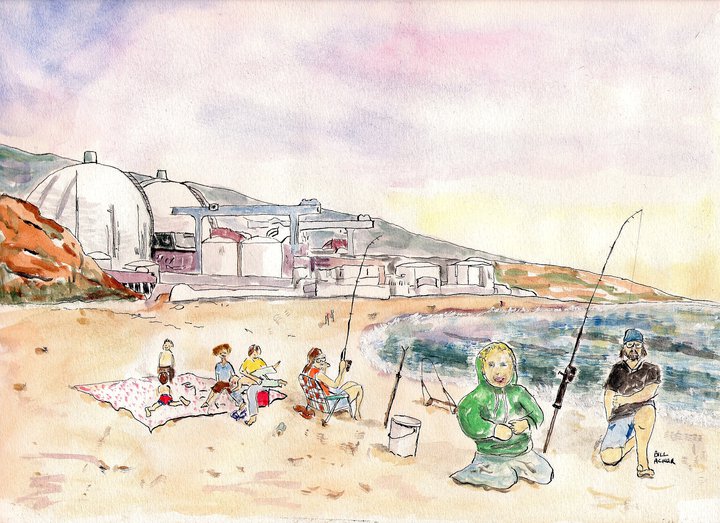
But sufficient for a day was its own evil, and ours was nothing of the kind. June gloom fog was a distant and fading memory of the summer passed, and the sun, plotting a lower path across the cloudless cerulean sky worked in vain against our summer tans. Dan and I waded in waist-deep water, lifting our fishing rods overhead with each passing wave wash, and braving the eventuality of getting poked in the foot by a rock that had drifted away from the nearby jetty—or by a stingray hiding in the lee of it. Tommy, Matt, and Zach busied themselves with “digging to China” near the water’s edge, groaning every ten minutes that a large set would flood their excavation site. Jonny lay on a blanket under Mom’s red beach umbrella and more to the point, her watchful eye…his own eyelid barely betrayed the twin-pinhole scars of his run-in with a low-dangling hook a few months before. Needless to say, Jonny wouldn’t be anywhere near a fishhook for several more years.
Dad stood high on the beach, as he always did, to avoid soaking his shoes and jeans. I don’t recall whether or not he owned a pair of shorts; he always wore jeans and a solid-color polo shirt to the beach. His yellow Eagle Claw rod (one of two prized possessions, the other being a Martin D28 guitar he bought with paper route and dish-washing money in 1962) held attentively in his left hand, and the handle of the Penn spinning reel gripped lightly between the thumb and index finger on the right, Dad relaxed in the sun as we did, but for his own quiet reasons.
Bill Acker was the second of four children, and the only son of an accountant and a housewife transplanted from Pottsville, PA to Pasadena, CA, who started a family in their forties. When Dad was 15 years old, his father suffered a debilitating stroke, and much of the burden of supporting aging parents and three sisters partially fell to him. He worked several jobs throughout high school and junior college, foregoing his interest in astronomy that might have taken him to some distant university or universe, to stay in Pasadena, and hand-over his paychecks to his parents. Dad traded his home-made telescopes—complete with hand-ground lenses-- for two years of lithography and printing classes at Pasadena City College that blued his collar, but not his spirits. For as long as I’ve known him, Dad has always been defined by his tireless work; and that, in turn, was marked by his selflessness and sacrifice. One of his only recreations was fishing, and then, only when his sons could join him.
Yet all of that was prologue for this day, it seemed. I watched my dad standing there far from the water, a slight bend in the tip of his rod that flexed and gave with each wave that washed over his line. There was an air of jocularity around his otherwise stoic frame; a long summer as a Cub Scout Master and Little League President had come to a quiet end, and this bonus weekend was savored like a fine meal. Despite the slow bite for a few hand-sized barred surf perch and a small corbina, Dad loved fishing with his family, and it showed in his posture: A proud, magnanimous man, regarding Creation on a fine Indian summer day, as well as his six contributions to it.
The slow fishing failed to keep my interest, however, and I wound-in my line and trudged out of the surf. As I walked towards my Dad to put my rod in the sand-spike and go help my brothers with their international tunnel project, I saw my dad silently mouth, “I love you” to Mom, sitting several feet away in her beach chair. They smiled at each other for a brief moment, and I felt an interestingly bashful shame (the shame eleven year old boys experience right about the time they demystify the girls-have-cooties notion) for having witnessed their amorous exchange.
Instead of running over to the considerable hole my brothers had now dug in the sand, something drew me to my dad’s side that afternoon, some new question that up until that moment, I didn’t know I had in my brain, or maybe my heart.
“Dad,” I asked, “How do you know who to marry?” His eyes didn’t move from his rod-tip, as it seems I had posed my important query at the same time as one of the few perch in the waves was tapping at his razor clam bait offering, but his wide smile informed me that he had heard me.
“Why, you gotta girlfriend?” he asked through his smile.
“No!” I barked, half-embarrassed, and half-proud that my dad would think me so worthy…and at eleven years old! “No, I mean, I’m not getting married ever, but, how do you know who you should marry?”
The pitch of my not-yet-changed voice—and the fact that no more twitches in his rod tip meant whatever was eating his bait had finished and moved-on—caused him to look down at my face, this time with a knowing smile, his lips pressed together beneath his moustache in a wry but understanding grin.
It was in that moment—one of my father's more tender—that Dad gave me an answer his father had probably given him. "You'll meet a lot of women, Ben. Some you'll love, some you'll hate. And there will be a lot of things about each of them that you love, and some things you won’t. Find a girl whose loveables outnumber her hateables, and hold-on to her. Respect her. Protect her. Celebrate her. Honor her. Cherish her. Just love her. She's the one that will make your dreams come true.”
“But how do you find a girl like that?” I asked, feeling not-quite as embarrassed as a moment before.
“It takes time. You have to be patient. And when it happens, you’ll just know. The way I just knew with Mom,” he said simply, looking at his rod tip again. “But you gotta work at it once you find her,” Dad cautioned. And then, in demonstration of a trait he would eventually pass on to me, my dad synthesized his comments by pulling a random quotation from the complex recesses of his mind: “With time and patience, the mulberry leaf becomes the silk gown.”
“What’s a gown?” I asked. After all, I had five brothers, and mom was never really the gown-wearing type.
“It’s like a fancy dress,” he answered unimportantly, realizing the moment had passed. “Remember the silk worms in Mrs. Wheeler’s class?”
I remembered them: In just a few weeks, their collective insatiable appetite had practically denuded the mulberry tree outside my fifth grade classroom. Quivering, pallid gray caterpillars whose life story written for them by Nature, it seemed, was to eat, change into flightless moths, and make baby silkworms. And I remembered the cocoons they spun were made into silk. Whatever that was. The closest thing I had to silk was the smooth nylon trim sewn around the edge of the blanket on my bunk bed.
“Oh yeah,” I said, with unimportance to match my dad’s, looking over at Tommy and Matt, who had given up on digging, and had Zach buried up to his neck precariously close to the surf line. I glanced at my dad’s face without saying anything, and without looking away from his rod tip, nudged his head towards Zach. “Go dig your brother out before they drown him.”
For an eleven year old boy, Dad’s answer was sufficient, but full of questions. Girls need to have more good stuff than bad stuff, I remember thinking as I knelt in the sand, digging frantically as Zach coughed and sputtered, taking another wave in the face. Although dating was still a few years away, I mulled Dad’s words over and over in my head, considering each of his directives on its own merit.
Respect her. Protect her. Celebrate her. Honor her. Cherish her. In other words, Love her. It wouldn’t be for many years that I came to a more complete understanding of the profound wisdom Dad had shared with me that day. It was a birthday gift unlike any other I had received from my parents. It was the first present I got from my Dad that signaled he realized I was growing up, he didn’t see me as a little kid all of the time, he didn’t think that I was incapable of comprehending some of life’s deeper truths (even though at eleven years old, I had no idea how to “celebrate” a person, or even what “cherish” meant.)
When I think about what Dad meant that day on the beach, when I think about what love really is, I sometimes like to think of those slow, steady, and purposeful silkworms systematically devouring their leafy meal. Their fate is inevitable—after a life of incessant eating and growing, each caterpillar spins a cocoon that will never open to reveal the moth inside. Instead, most of the cocoons are boiled to kill the pupae within, unwound into long thin strands of silk, and woven into luxurious, delicate fabric. Only a fraction of each generation is allowed to crawl from their cocoons as moths, breed, lay eggs, and die within a few days. And whether they go out in the hot bath or in the throes of post-reproductive bliss, each of their lives is sacrificed to create something beautiful, something that is celebrated and cherished, something that is protected and honored, something that is respected and loved—long after the changing seasons bring new leaves to the mulberry tree, and new caterpillars to their ultimate destinies.
Like them, we are called to sacrifice our work, our effort, our time, our energy, to grow something greater than ourselves, to search for loveables in another person. We are called to love another by giving of ourselves, by sharing freely without reservation. Our hopeful reward for such efforts is that our selfless giving is reciprocated, that we might reap what we sow…so long as we are careful in our selection, cognizant of the grand design, and patient for the results of our love.
Unlike silk worms, we like to believe we have a choice in the matter. There is no pot of boiling water in most of our futures, but there is always the possibility that our sacrifice, our gift to another, will not be returned to us. The hateables strike again, and it is in that patience that we will come to understand that.
As for me, I think I finally understand what my dad was talking about all those years ago on the beach. For a man whose life had largely been sacrifice, that day—that glorious autumn day with the sand beneath his shoes and the sun on his face, with his loving wife and six sons—was his silk gown. Granted, that is a laughable visual image in the literal sense. But figuratively speaking, that day, like so many others since, was his achievement for having the patience to see the greater purpose of his actions, and to have the foresight to accept the possibility that two seemingly independent examples of selfless love could connect in a powerful way. So many years ago, Dad fell into the truth that by giving of himself and his time to his sisters and parents, he would ultimately achieve his goal of having a family of his own. By being patient, he would meet the woman who would give back what she had been given, and when he met her, he would “just know it.” Together, nothing could stop them from fulfilling their purpose: creating their own personal Heaven to share with a family. He lost nothing. He gained everything.
No selfless act of love is ever wasted; it holds the potential to make our dreams come true.
Sunday, January 15, 2012
Amorous Amphistichus argenteus: Winter Perchin' in Southern California
Love is in the air; or more specifically, in the water. As discarded Christmas trees dry curbside in the Southern California sun, barred surf perch (Amphistichus argenteus) move in to begin their pre-Valentine's Day spawn in the shallow surf along sandy beaches from Santa Barbara to San Diego. These scrappy fish, which range from hand-sized fish (mostly males) to big, beautiful "slabs" (larger females), stack up in the surf zone looking for a mate... and occupying their down time gorging on sand crabs, small fish, bean clams, and anything small enough to fit in their mouths.
When the waves and conditions allow it (which is more often than not in SoCal's mild winter days between storms), fishing for barred surf perch with light tackle provides plenty of sport for these fish, which range from about a half-pound to upwards of three pounds for the larger models. 4 lb. test with a Carolina rig is perfect for flipping a sand crab or a plastic grub to these voracious fish. Fishing is generally best two hours before and two hours after high tide. And you don't have to fire-off a 100 yard cast; these fish can be hooked in ankle-deep water on a slow retrieve with a small plastic grub (Big Hammer™ 1¾" Perch Grubs #28 Motor Oil Red or #92 Motor Oil Green are my favorites).

As the tide falls, sand crab beds often become exposed, betrayed by the small "Vs" in the sand as the small crustaceans dig back in as the wave recedes. Fishing directly in front of these beds, particularly if there is a trough, deep spot, or depression in the bottom, is practically a sure-thing if the fish are home. If they're not, walk down the beach and find the fish. Where there's one, there are almost always more.

When the waves and conditions allow it (which is more often than not in SoCal's mild winter days between storms), fishing for barred surf perch with light tackle provides plenty of sport for these fish, which range from about a half-pound to upwards of three pounds for the larger models. 4 lb. test with a Carolina rig is perfect for flipping a sand crab or a plastic grub to these voracious fish. Fishing is generally best two hours before and two hours after high tide. And you don't have to fire-off a 100 yard cast; these fish can be hooked in ankle-deep water on a slow retrieve with a small plastic grub (Big Hammer™ 1¾" Perch Grubs #28 Motor Oil Red or #92 Motor Oil Green are my favorites).
The author with a fat barred surf perch caught on a Big Hammer Perch Grub, Ventura, CA.
As the tide falls, sand crab beds often become exposed, betrayed by the small "Vs" in the sand as the small crustaceans dig back in as the wave recedes. Fishing directly in front of these beds, particularly if there is a trough, deep spot, or depression in the bottom, is practically a sure-thing if the fish are home. If they're not, walk down the beach and find the fish. Where there's one, there are almost always more.
Ben and brother Dan with a nice double on fat slabs, Ventura, CA.
Saturday, December 31, 2011
2012 Fishing Goals Aren't really mine at all...
The beauty of saltwater fishing, whether from the beach, the rocks, a pier, a boat, or a kayak, is that there is always something new to try. Despite a lifetime of plying the waters off California for over a 100 different species, most catches are not "firsts," and seldom are they "personal bests." Certainly, there are several California species that I have yet to capture at all, and with a little luck, time, and effort, I may enter my first sturgeon, striped bass, or salmon on my 2012 fish logs.
What is more likely this year, and perhaps just as satisfying, is the prospect of fishing with my son, who will be turning four in April of the coming year. Although he has caught several different species of fresh and saltwater fish, he has been expressing a new interest in accompanying his dad on fishing trips a lot more lately. I'm looking forward to showing him things that my own dad showed me at some point, though I really can't remember specifically when-- how to find sand crabs in the wavewash, or sandworms where the "wet sand" and the "dry sand" meet; how to reel S-L-O-W-L-Y when grubbing, and QUICKLY when trying to get a rig up off the bottom in a hurry to avoid drifting kelp; how to hook a sheephead, despite their bony mouths; how to measure a crab or a lobster, and not lose a finger in the process.
Like I said, I don't really remember when I learned these things, and I have the skunks and scars to prove that several lessons were required. What I do know is that these were things my father showed me with patience and persistence, time spent on the water together with my brothers and me.
2012 promises to be a year of firsts and personal bests... for my son. I can't think of any better fishing goal for me in the coming 12 months than to foster in my son a love of ethical angling and an understanding of the unique marine ecosystems we enjoy in California. It's a goal I know will pay dividends well past our next trip around the sun.
Wednesday, December 28, 2011
Hog's Heaven, Pig Pen, Slab Central... Barred Surf Perch in December
Eleven has always been a lucky number for me, a fitting analogy for various things like synergy, teamwork, and even love (all represented by two Ones who, standing together in proximity and partnership, achieve more than they would alone, more even than the sum of their parts). Ironically for me, 2011 has been a year of modest ups and incredible downs. Not unlike the tides that follow a similar pattern, such ebbs and flows of existence have the potential to wreak havoc and destroy, just as they have the ability to cleanse, to refresh, to purify, and to prepare a new canvas upon which to paint tomorrow's masterpiece.
Such was our most recent fishing excursion to Hog's Heaven, a stretch of sandy shore in south Santa Barbara county that has been a place of extremes--incredible fishing, or a ghost town serving as little more than a place to practice one's casting ability.
My brother Dan, cousin Bryan, and I arrived about 90 minutes before the top of a considerable tide, and found a beach that was telling its usual tale: a glance down the beach in either direction betrayed holes and rips in an S pattern between hills and valleys. So pronounced were the dunes today that as water ran back to the ocean, it flowed in miniature rivers, pushing huge plumes of chocolate-colored sand out into the sea.
The first cast immediately loaded-up... with eel grass, bits of kelp, and other assorted junk that immediately covered my quarter-ounce egg sinker in one bunch, and four feet below, another clump of detritus engulfing my size 8 Gamakatsu hook and BH MORF grub. Subsequent casts produced a similar result, and hiking up and down the beach a half mile in each direction from our starting point didn't change the outcome much. Sandcrabs were nowhere to be found, so bait fishing wasn't an option. Only a couple of small male barred surf perch that managed to find our offerings before the weeds, and some near-shore acrobatics by a family of porpoise were our rewards for fishing in tough conditions.
After an hour of picking slop off the setups, and pushing my 4 lb. outfit to its limits, we made a decision to head south a bit and try a few other spots. Travelling light and mobile, we left our rods rigged, tossed backpacks in the bed of the truck, and were south on the 101 in short order.
Bypassing a 7-Eleven stop for coffee in an effort to fish the backside of the high tide, we found a stretch of beach about 8 miles down the coast with what appeared to be excellent conditions: cleaner water, good rips, a pronounced trough, and wave patterns that demonstrated a very fishy beach.
As I stepped into the water, I felt the tell-tale movement of sandcrabs underfoot. I pulled the grub off my hook, placed it in my pocket, and pinned a "Taster's Choice" sandcrab (not too big...not too small) on the hook. The first cast splashed down behind the trough, and before I could take up the slack in the line, a chunky barred surf perch had inhaled the bait. The fish made a run to the north, providing a spirited, drag-pulling fight on 4 lb. test. She taped out at 12 inches, posed for a quick photo (on my cousin's camera, unfortunately for this report), and back into the ocean she went.
As the tide fell over the next three hours, we caught and released dozens of perch, the largest being a whopping 15 inches. These fish had shoulders! Even the low tide didn't seem to turn off the bite, as the fish were practically beaching themselves to eat sandcrabs at our feet. We left them biting, satisfied with an outstanding bite for barred surf perch of a quality and quantity that we hadn't enjoyed since childhood trips to San Quintin in Baja California. True to the memory, I even found (and released) a legal Pismo clam kicking my feet in search of bait.
2011 is nearly over; to paraphrase the Good Book, "Sufficient for a year is its own evil." Heck, a little numerology demonstrates that the sum of 12/26 is eleven...and maybe there's something to that.
The next year is full of promise--both good and bad, ups and downs, ebbs and flows. It's an analogy that is not lost on me, particularly with regard to fishing the beaches of Southern California. Tide is king, here; local lakes lay flat and lifeless for the most part, their surfaces only rippled by wind or a wading bird. But the surf--with her crashing waves, her ups and downs of tides, and the ever-shifting sands, are a dynamic example of a life well-lived.
Pulling a few slabs from the foam from time to time is just a bonus.
Friday, December 23, 2011
Miracles
There were few times that my brothers and I moved faster than when we were changing from our church clothes to our beach clothes. With holy water still splashed on our foreheads and the recessional song fresh in our ears, we promised to hang-up our collective Sunday Best “later”, piled high on the unluckiest brother’s bunk bed (he would get stuck with the job that night after sleeping boys were carried in from a long day in the sun). An eclectic collection of towels, fishing rods, and beach toys was dragged to the van, everyone took his favorite seat, Mom counted 6 noses in the rearview mirror, and we were southbound on the I-5…
…except on this particular trip, we had a few stops along the way. Before we trod upon the sand that day, we added a few more noses to the car--friends and cousins who would fill the Ackermobile to capacity, and become unwilling witnesses to one of our family’s great near-misses, and perhaps, one of our greatest miracles.
Our destination for a balmy summer Sunday was as it always had been on many post-church beach days: San Onofre State Beach. Fully 80 miles from our house in Pasadena , Mom and Dad preferred the wide-open sandy stretch of coastline, devoid of the urbanization, crowds, and riff-raff (as Dad called it) that could be found at beaches like Santa Monica and Venice
After a particularly painful round of Slug-Bug on the Five (there must have been a Volkswagen convention in San Diego that day), dad pulled into the dirt lot right on the beach, and the doors exploded with a storm of boys, toys, and beach gear. Dad waited for the dust to settle, then carefully pulled out his rods and sand spikes from beneath the van seats.
Fishing that day was great. I don’t recall the tides, but they must have been a strong evening incoming, as the usually good fishing in sight of the power plant domes continued to improve throughout the afternoon. By the time our shadows stretched out behind us on the sand and the ocean glowed orange in eyes squinted against the sundowner winds, we had caught several nice corbina, spotfin croaker, and a four foot leopard shark…all destined for our family table.
The sun set on a perfect day together as a family, and the fiery hues of the sunset cooled to violet, then blue. Dad was having trouble seeing his surf rig to re-bait. Eager to get his bait back into the darkness of the surf—and whatever hungry denizens of the deep might still be lurking in the waves—he set the rod in the sand spike, lit the lantern, and pulled his hooks down towards the light, just a foot from the sand.
About the same time, my youngest brother Jonny, about two years old, came running up to Dad. As toddlers running in sand (or anywhere, for that matter) are apt to do, Jonny fell forward at my dad's feet. Instantly, the rod took a heavy load and bent well, as if a leopard shark or a 10 lb. spotfin had taken the bait and turned towards Catalina…only problem was, the twin baitholder hooks and three ounce pyramid sinker were not in the water.
About the same time, my youngest brother Jonny, about two years old, came running up to Dad. As toddlers running in sand (or anywhere, for that matter) are apt to do, Jonny fell forward at my dad's feet. Instantly, the rod took a heavy load and bent well, as if a leopard shark or a 10 lb. spotfin had taken the bait and turned towards Catalina…only problem was, the twin baitholder hooks and three ounce pyramid sinker were not in the water.
Mom turned pale—no—it was more than that. I watched her soul age just a bit in that moment—something flashed across her face in the darkness of the night, a strange light in her eyes that appeared with great urgency and disappeared just as quickly, as if her guardian angel had snapped a Polaroid at that exact moment so that he could forever capture the instant when he failed her.
When Jonny had fallen, one of the 1/0 barbed baitholder hooks had caught him in the corner of his left eye. He immediately started pulling at the line and clawing with sandy hands at his face. Dad acted quickly and instinctively, cutting the line and holding Jonny’s arms down at his sides. I remember seeing the shank of the hook sticking out of my baby brother's eye, and I feared the worst.
How Mom and Dad collected everyone up in the van in such a short amount of time is still a mystery to me to this day, but leaving our fishing rods, gear, and beach equipment on that dark, desolate stretch of beach probably helped their cause. Dad put a cloud of dust in the air as he sped from bonfire to bonfire along the beach, frantically pleading with people for directions to the nearest hospital. After some questionable information from a rather inebriated group of beach partiers (my parents still half-laugh that we really must have been a buzz kill for them—their directions were flawless) we were northbound on the I-5, lighter for the lack of our belongings laden heavily with stowaway sand, and quiet not from the satisfied fatigue of a day in the sun, but in solemn vigil for our youngest brother. I was convinced he would lose his eye, and remember wondering how many pirate jokes he would have to endure in school wearing an eye patch for the rest of his life.
Within minutes, our family arrived at San Clemente State
My brothers, their friends, and I just sat there quietly. Really, what could we say? It wasn’t the first time our youngest brother had been taken from us, and I think each of us held the same memory there in the parking lot.
As the eldest of six sons, I remembered several of my brothers being brought home from the hospital. The drill was the same: the van would pull up in front of the house, and my brothers and I would wait on the porch while Dad helped Mom out of the car, a new brother cradled in her arms. (We were born long before car seat laws!)
Tommy, the third. Then a fourth, Matt. Zachary, the fifth. And then, Jonny… but there was no baby. No baby at all. No Jonny. Just Mom and Dad, their arms around each other, heavy-hearted and with an emptiness in their eyes, as if there were no more tears to be cried. They walked up on the porch, fell to their knees, and wrapped their arms around their five sons. Tragically, it would not be the last time we embraced on the porch as a family missing one of our own, but it was the first.
I gathered my brothers together in our room, and instructed all of them not to ask Mom and Dad about the baby. I didn’t quite know how to tell them what I knew must be the truth; that Jonny had died in the hospital. Why else would Mom and Dad come home without our brother?
After a sullen week being babysat by aunts and uncles, Mom and Dad showed up that weekend with our youngest brother, who had needed a few extra days in the Neonatal Intensive Care unit. Shocked, delighted, amazed… our little brother was home! Jonny was our miracle brother, back from the dead. He is, unanimously, our “favorite brother.” It wasn’t for several years that I told my parents about our meeting in our bedroom.
And now, in an instant, he had been whisked away from us by fate and circumstance…and I think each of us that remembered his homecoming said a silent prayer that somehow, he would be OK.
Inside the hospital, the ER staff took one look at my brother’s eye, and decided to call a specialist. Incredibly, the hook point was turned away from the eyeball when he fell—instead of impaling the eye itself, the hook had lodged in the bone of his eye socket. If the hook had been turned the other way, tied the other way in the snell, hit by a gust of wind at the wrong moment…things might have been very different for Jonny; maybe not better, maybe not worse.
Just different.
The ophthalmologist—who showed up an hour after being called, wearing a Hawaiian shirt and explaining that he had been at a luau—carefully anesthetized the area around Jonny’s eye, pushed the pointed barb back out through his eyelid, snipped off the barb, and then pulled the hook free. The only signs that anything had happened were two small pinholes in the corner of Jonny’s eye, and the dried tears on his rosy, cherub cheeks. “He was lucky,” said the doctor. “It’s a miracle.”
The ophthalmologist—who showed up an hour after being called, wearing a Hawaiian shirt and explaining that he had been at a luau—carefully anesthetized the area around Jonny’s eye, pushed the pointed barb back out through his eyelid, snipped off the barb, and then pulled the hook free. The only signs that anything had happened were two small pinholes in the corner of Jonny’s eye, and the dried tears on his rosy, cherub cheeks. “He was lucky,” said the doctor. “It’s a miracle.”
Equally miraculous was our return to the beach, to find that our rods, reels, shoes, clothes, and beach toys were still there, being carefully “guarded” by the nice folks that had given us directions to the hospital. We hugged and high-fived these complete strangers, thanking them for their help. One of them (who was officially drunk upon our return to the beach) was having the time of his life fighting a huge fish on Dad’s fishing rod. None of us had the heart to tell him the hooks and sinker were hopelessly tangled in a huge ball of kelp, 20 feet up the beach from the water.
And to this day, we still call Jonny “Hook-Eye.”
I’ve long believed that our Southern California beaches—places where you can stand with your toes in water that stretches thousands of miles in front of you, and your heels on land that stretches thousands of miles behind you—are a place of miracles. It’s a boundary of sorts between what we can know through our senses, and what we can know with our hearts. It’s the border between the ordinary and the fantastic, where mortal blends with miraculous, the way waves stir the sands along the coast, the way time stirs our collective memories of growing up with the sun on our shoulders and sand between our toes.
Our family witnessed miracles that day, but they had little to do with a fish hook in the eye.
Our miracle was Jonny himself. Our miracle was the magic of summers spent in the company of family and friends. Our miracle was that years later, Mom managed to enjoy fishing again…slowly. Our miracle continues every time a few of us get together along some fishy stretch of beach, wet a line, and celebrate how miraculous it is to be brothers.
Subscribe to:
Posts (Atom)